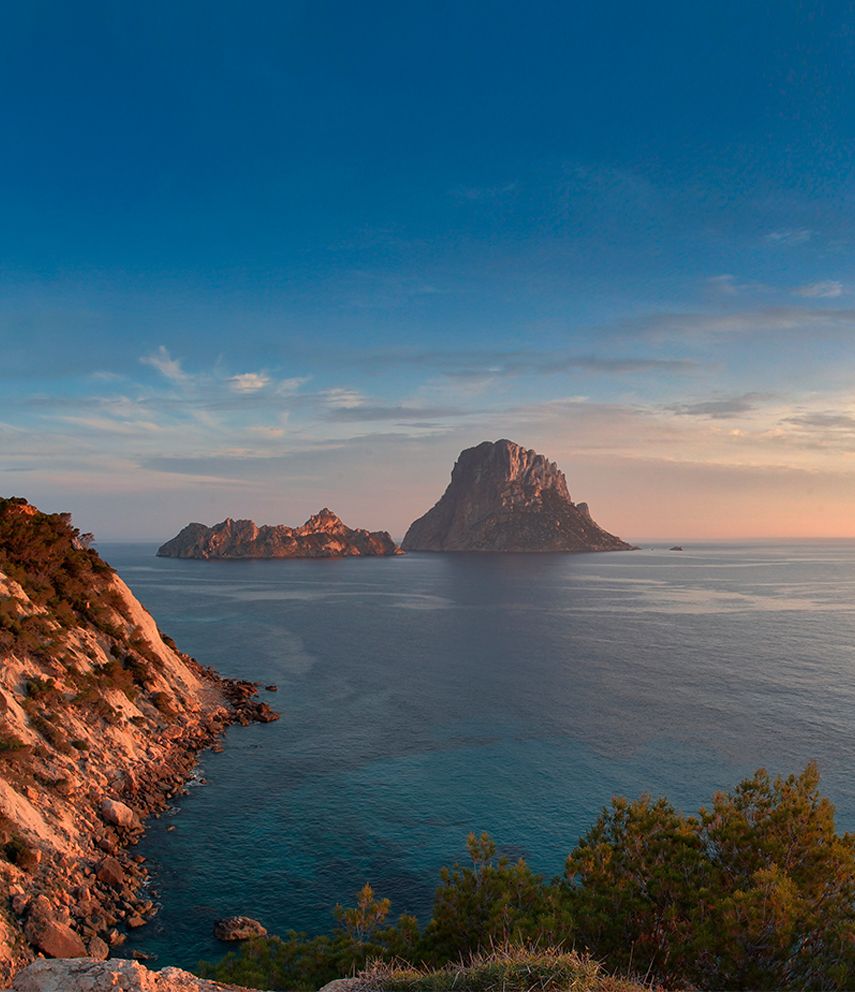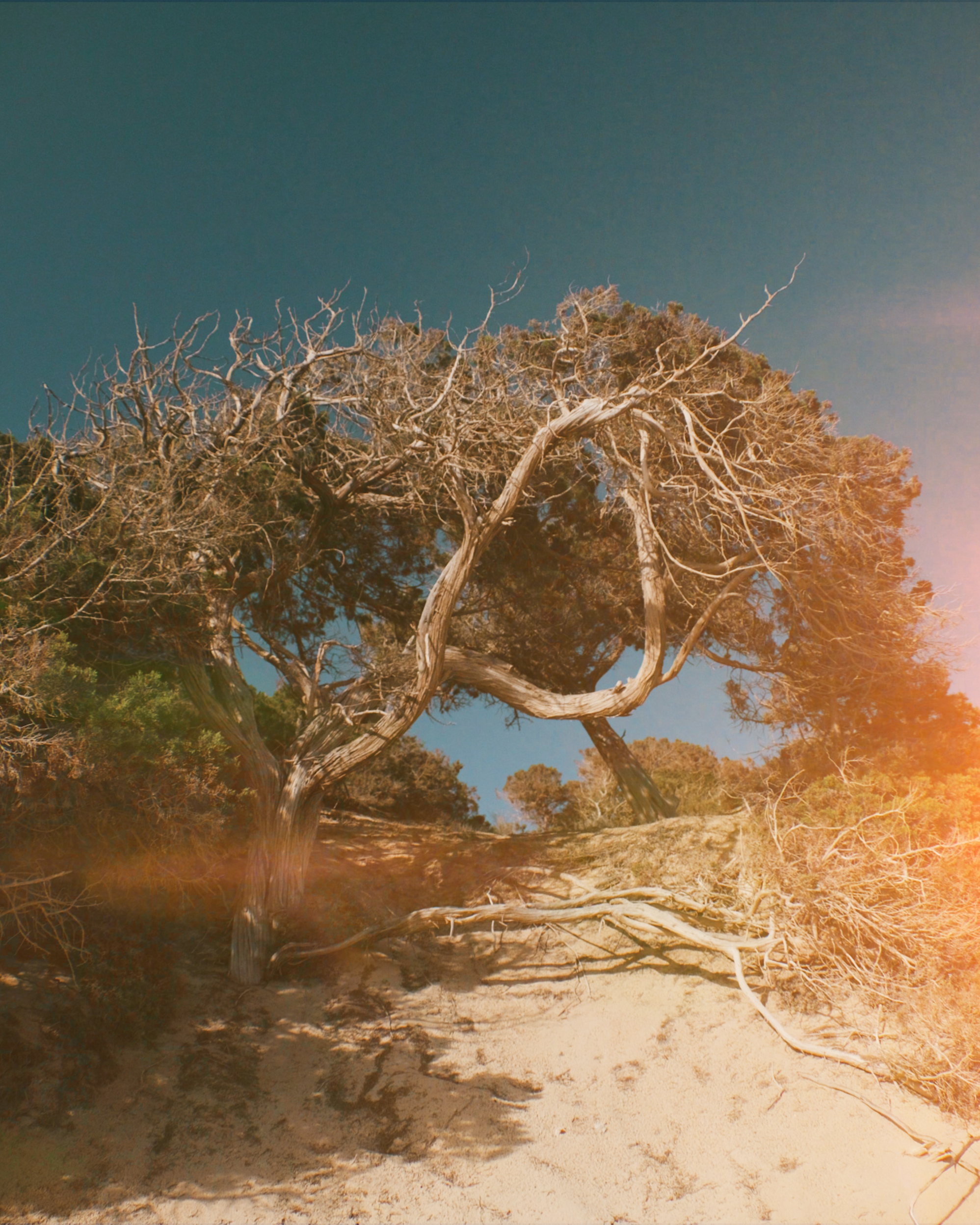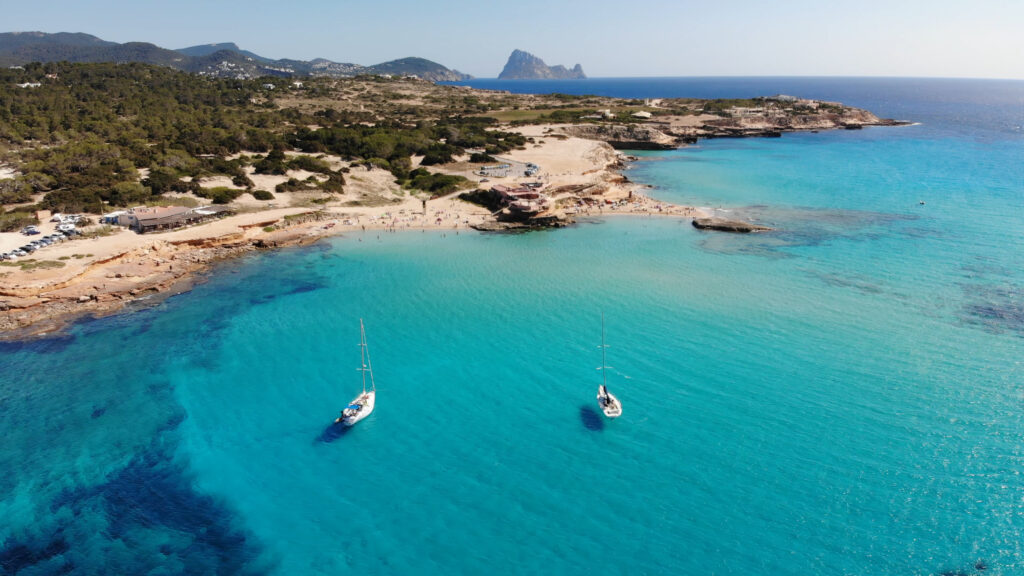
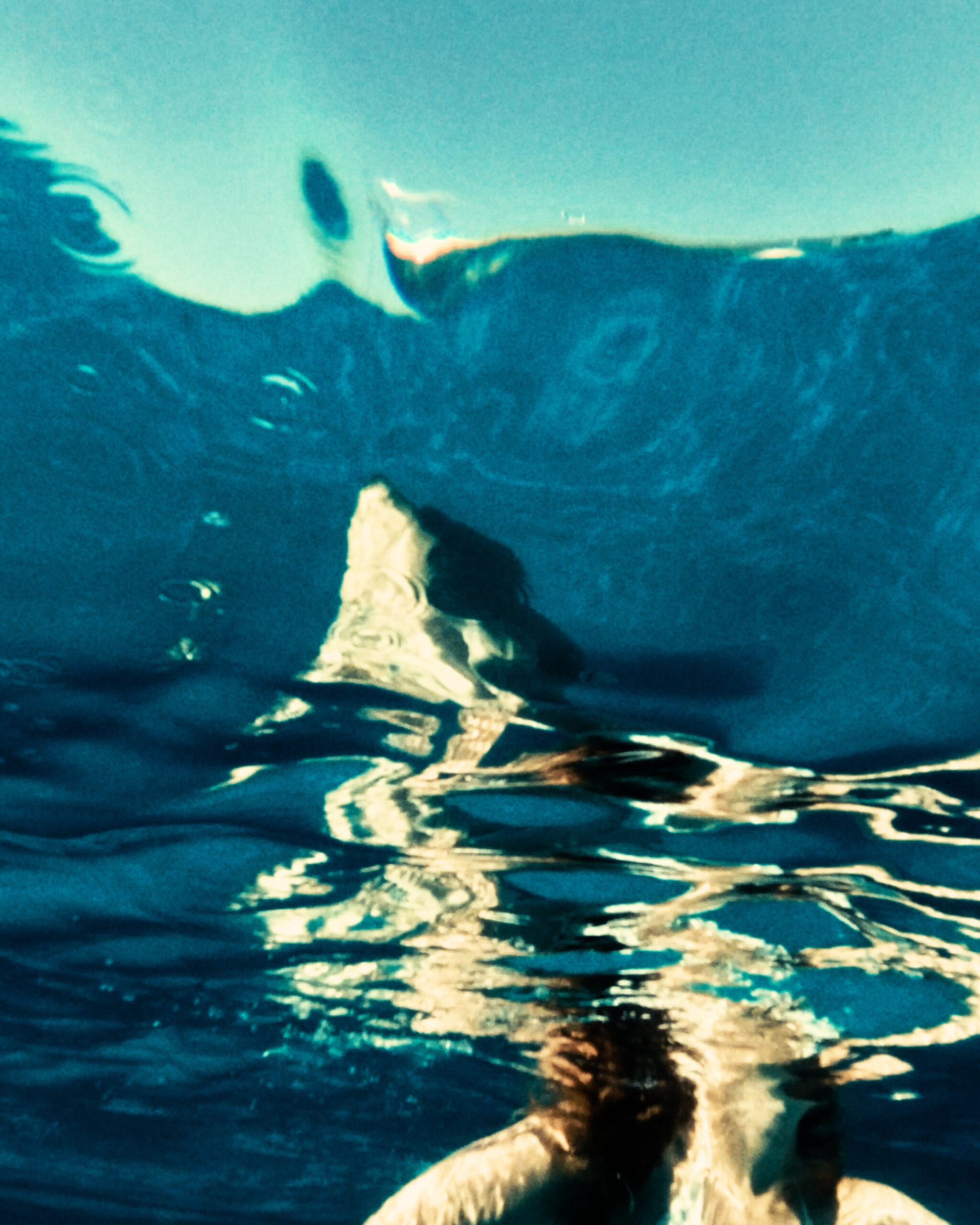
They come for the parties, but stay for the light.
That golden, diffused, holy light — softer than a spotlight, but sharper than memory.
Painters, filmmakers, dancers, and dreamers have long spoken of it as if it were a spirit. Ibiza light doesn’t just illuminate; it transforms. It casts long shadows of intimacy. It sculpts people’s faces into poetry. It makes everything — ruins, olive trees, old lovers — look cinematic. But what is it, really?
The truth is layered, like the atmosphere itself.
1. The Geometry of the Gods: Latitude, Altitude, and Angle
Ibiza sits just above 38° North — not quite tropical, but close enough to the equator to enjoy high-angle sun year-round. This southern position means the sunlight hits the island with more direct intensity, especially in spring and autumn, when other parts of Europe are veiled in grey.
Yet, it’s not a harsh light. Why?
The angle at which the sun moves across the Mediterranean sky — broad, slow, sweeping — allows for elongated golden hours. Sunrise and sunset last longer here than in northern latitudes, offering creatives a longer window to capture that magic diffused glow.
2. Surrounded by Mirrors: The Sea as a Light Multiplier
Ibiza is an island — and not just any island. It floats in the Western Mediterranean, surrounded by water with high salinity and purity. This means the sea acts as a natural reflector, bouncing sunlight back into the sky and across the terrain in subtle, scattered patterns.
The high albedo of the Mediterranean Sea — especially around shallow coves and white-sand beaches — results in soft, ambient illumination. Think of it as a constant fill light on nature’s film set.
Even inland, this reflected light weaves its way through the pine forests, bouncing off whitewashed walls, dry-stone terraces, and the bones of ancient architecture.
3. The Saharan Veil: Dust That Paints the Sky
Then there’s the Saharan dust — an invisible muse.
At certain times of the year, especially late spring and summer, warm winds known as the “calima” carry fine mineral dust from the Sahara across the sea to Ibiza. These suspended particles act as atmospheric filters, diffusing sunlight and creating surreal color shifts.
This is what turns the sunsets orange-peach-scarlet, or makes midday light shimmer with an almost painterly softness. It’s the same phenomenon that makes sunsets on Mars — also a dusty atmosphere — appear blue.
Scientists refer to this as Mie scattering, where larger particles like dust change the direction and wavelength of light. Artists call it a blessing.
4. Dust, Humidity, and Visual Texture
Ibiza’s air carries a fine, mineral-rich humidity — not as dense as the tropics, but far from dry. This atmospheric moisture helps to soften and refract light in subtle ways, wrapping edges, adding halos, and creating glow.
On hazy days, distant hills melt into blue-grey gradients. On clear days, the crystalline atmosphere lets light cut through like a blade. It’s this variability — the push and pull between clarity and haze — that gives Ibiza its photographic mood swings.
5. Emotional Optics: Why It Feels So Different
Finally, there’s the psychological alchemy of island light.
Removed from mainland pollution, Ibiza’s skies remain largely open and honest. With minimal urban lighting outside the major towns, the natural rhythms of day and night feel sacred. Light doesn’t just illuminate space — it defines time. It shapes how we feel.
Ask a painter in Santa Agnès why they moved here, and they’ll mention the way light moves across an almond blossom at 5:30 PM. Ask a filmmaker why they shot here, and they’ll speak of how dawn bathes the hills in a pink hush. Ask a raver at Benirràs why they stayed until sunrise, and they’ll just smile.
Conclusion: The Light That Looks Back
Ibiza’s light is not passive. It’s not a spotlight; it’s a mirror.
It doesn’t just show you the island — it reveals you to yourself.
Whether it’s filtered through Saharan dust, bouncing off saltwater, or pouring over a field of fig trees, the light here has a way of pulling your soul into focus. No wonder the misfits and magic-makers call this place home.